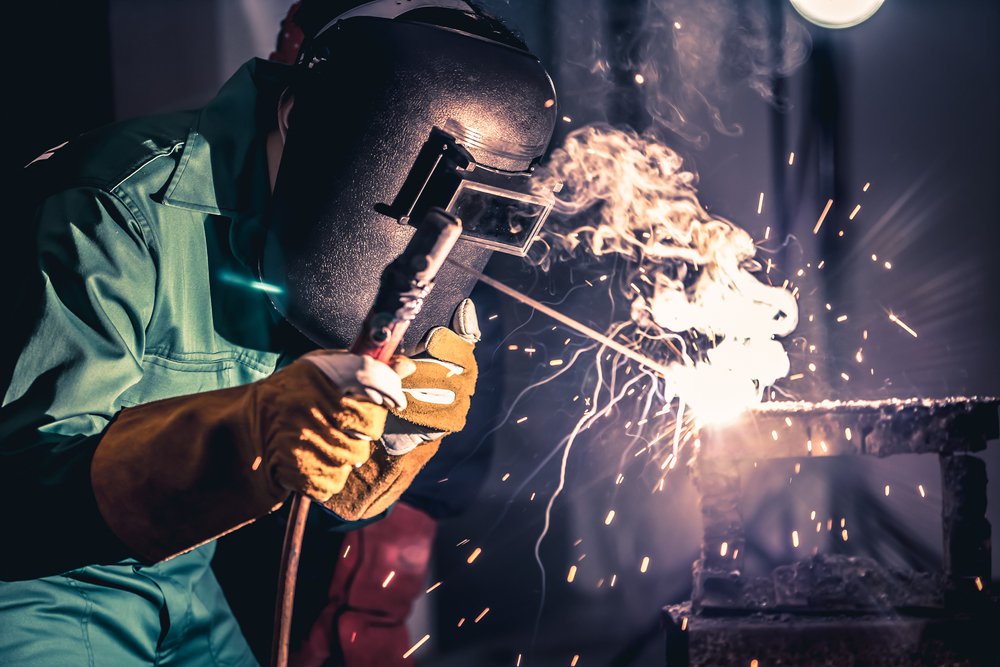
Mastering welding safety means going beyond helmets and gloves to understand the advanced hazards that separate hobbyists from professionals. This guide covers three critical areas where proper knowledge protects both your immediate wellbeing and your long-term career in the trades.
You've learned the fundamentals: keep flammables away from your workspace and never look directly at an arc. You know to wear your FR clothing, eye protection, proper gloves, steel toes, and welding hood. These basics matter, but they're just the beginning. Professional welding safety demands a deeper understanding of hazards that aren't always visible or immediately obvious. As you progress in your welding career, you'll encounter situations where standard precautions aren't enough. Respiratory hazards, arc flash incidents, and confined-space work require specific knowledge and protocols that every serious welder needs to master.
Arc Flash Hazards: Understanding the Invisible Danger
Arc flash is different from the welding arc you work with every day. While your standard MIG or TIG arc produces intense light and heat that you're trained to shield against, an arc flash is an explosive electrical event that releases tremendous energy in a fraction of a second. The intense heat, often exceeding 35,000°F at the arc's center, can cause severe burns even at a distance. The explosive pressure wave can throw you backward or propel molten metal and debris at high velocity.

Welding Safety Protocols for Arc Flash Prevention
Welding safety protocols for arc flash begin with understanding when you're at risk. High-amperage welding operations, work near electrical panels or switchgear, and any welding on or near energized equipment all increase your exposure. Even experienced welders sometimes underestimate the risk when working in industrial settings where electrical systems run through walls, floors, and overhead structures.
Protection requires more than your standard welding jacket. Arc-rated personal protective equipment is specifically designed and tested to withstand the thermal energy of an arc flash event. Understanding arc flash boundaries, the calculated distances at which thermal energy drops to safer levels, is equally important. Equipment inspection takes on new importance when arc flash is a concern. Damaged cables, loose connections, or worn insulation become serious hazards near electrical systems.
Confined Space Welding: When Your Workspace Becomes a Hazard
A confined space in welding isn't just a tight spot. OSHA defines it as an area large enough to enter and perform work, with limited means of entry or exit, and not designed for continuous occupancy. Tanks, vessels, pipelines, manholes, and silos all meet this definition. The problem isn't the cramped quarters but the way these spaces concentrate hazards that would be manageable in open air. The atmosphere inside can be oxygen-deficient, toxic, or flammable, often without any warning signs you can see or smell.
Critical Welding Safety Requirements for Confined Spaces
Before anyone enters a confined space for welding work, atmospheric testing is mandatory. The space must be tested for oxygen levels, flammable gases, and toxic substances.
Required atmospheric testing includes:
- Oxygen concentration (must be between 19.5% and 23.5%)
- Flammable gases and vapors (must be below 10% of the lower explosive limit)
- Toxic air contaminants (must be below established exposure limits)
- Testing must occur before entry and continuously during work
Ventilation systems for confined space welding go beyond pointing a fan at the opening. Proper ventilation means establishing a flow pattern that removes contaminated air while bringing in fresh air, without creating dead zones where gases can accumulate. Permit-required confined space procedures verify that every necessary precaution has been taken. Someone must be designated as the attendant, remaining outside to maintain communication and coordinate rescue if needed.
Respiratory Protection: Your Lungs' First Line of Defense
Welding fumes are actually condensed metal vapors and complex chemical compounds that form when materials reach their melting point. These tiny particles, often less than one micron in diameter, penetrate deep into your lungs when you breathe them. Basic ventilation helps, but it's not always sufficient. A welder's breathing zone, the area right around your face while working, can still contain dangerous fume concentrations even in well-ventilated shops.

Choosing the Right Respiratory Protection for Welding Safety
Respiratory protection options for welders include:
- Half-mask air-purifying respirators: Adequate for many general welding operations in well-ventilated areas
- Powered air-purifying respirators (PAPR): Provide higher protection with active airflow, reducing breathing resistance
- Supplied-air respirators (SAR): Essential for confined spaces or high-hazard materials, supplying clean air from an outside source
Fit testing isn't a formality. A respirator that doesn't seal properly provides no more protection than not wearing one at all. Proper fit testing must be repeated annually and any time you change respirator models.
Material-specific concerns add another layer of complexity to welding safety. Stainless steel welding produces hexavalent chromium, a known carcinogen that requires enhanced protection. Galvanized steel releases zinc oxide fumes that can cause metal fume fever. Understanding when ventilation alone is sufficient and when respiratory protection is required separates competent welding safety practices from merely going through the motions.
Building a Sustainable Welding Career Through Proper Safety Training
These three advanced safety areas don't exist in isolation. Professional welding often involves multiple hazards simultaneously. Welding in a confined space might require both respiratory protection and arc flash precautions. The ability to assess these overlapping risks and implement appropriate controls is what defines professional-level competence.
Your health is your livelihood in the skilled trades. Lung damage, burns, or injuries from improper confined space entry accumulate over a career, potentially forcing you out of work you're good at and enjoy. Understanding and applying proper safety protocols isn't about being overly cautious. It's about being able to work productively and safely for decades.
At Arclabs Welding School, safety training is woven throughout our hands-on curriculum because skilled welders who understand hazard recognition and control are more valuable to employers and more likely to build lasting careers. Our instructors bring real-world experience from industrial and commercial welding environments where these advanced safety situations are routine parts of the job.
Ready to start your welding career? Contact Arclabs Welding School to learn about our welding programs, class schedules, and how we can help you develop the skills that industries are actively seeking. Visit us at arclabs.edu for all locations or call 877-647-4111 to speak with an admissions advisor about your welding education options.

