
Understand the science of metallurgy and transform how you approach every weld. Metallurgy explains why metals behave differently under heat and cooling, giving you the knowledge to prevent failures before they happen.
Metallurgy is the foundation of reliable welding. At its core, metallurgy is the science of how metals respond to heat and cooling cycles. When you weld, you initiate a controlled heat treatment in a localized region. Understanding metallurgy means recognizing that your arc is not simply joining two pieces of metal; it is fundamentally changing the internal structure of the material in ways that affect strength, ductility, toughness, and crack resistance. This knowledge transforms troubleshooting from guesswork into systematic problem-solving.
Metallurgy in Welding: Understanding Material Behavior and Quality
Metallurgy connects cause to effect. When a joint passes visual inspection but fails a bend test, or when a weld cracks hours after cooling, metallurgy provides the explanation. It shows why decisions about heat input, cooling rate, and material preparation matter far more than many welders realize. The welders who build the strongest joints consistently are those who think like metallurgists, even if they never step into a lab.
Why the Heat-Affected Zone Matters More Than the Bead
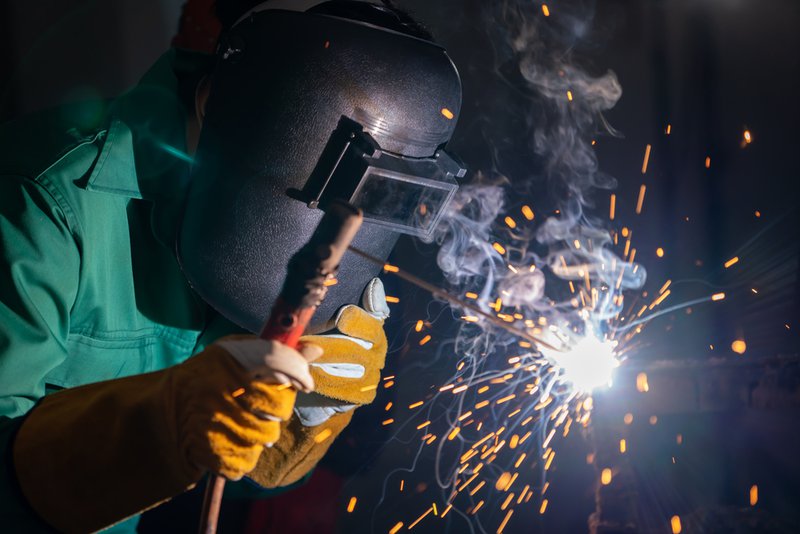
Many failures begin in the heat-affected zone (HAZ), not in the weld metal itself. The HAZ is the area of base metal adjacent to your bead that did not melt but experienced thermal changes significant enough to alter its structure and properties. This fact surprises newer welders because they naturally focus attention on the bead appearance. A joint can look flawless and still fail because the HAZ lost toughness or gained unwanted hardness.
HAZ behavior depends on several interconnected factors. The alloy composition, material thickness, degree of restraint, and cooling rate all influence whether the heat-affected zone becomes stronger or weaker relative to the parent metal. In carbon steels, rapid cooling can produce hard, brittle structures in the heat-affected zone that increase hydrogen cracking risk if other conditions align. Conversely, prolonged high heat can cause grain growth and reduced toughness in some alloys. This is why metallurgy matters: understanding these possibilities lets you control the outcome.
Key metallurgical factors that affect the HAZ:
- Rapid cooling on thick sections, which can produce unwanted hardness in certain steel grades
- Excessive heat input or dwell time, leading to grain coarsening and loss of toughness
- Poor fit-up that forces extended welding time, creating inconsistent thermal cycles
- High restraint from the base metal, which adds stress during shrinkage and cooldown
How Different Metals Respond To Welding Heat
Metallurgy explains why the same welding parameters produce different results across carbon steel, stainless steel, and aluminum. A technique that works reliably on mild steel can cause distortion in stainless steel or porosity in aluminum. This is not operator error; it is material science at work.
Carbon and Low-Alloy Steels
These materials form the backbone of structural and industrial welding. Most carbon steels weld smoothly, but higher carbon equivalents combined with thick sections and tight restraint shift the risk profile significantly.
The metallurgical challenge is hydrogen cracking, which occurs when hard, brittle microstructures form in the HAZ during rapid cooling. Preventing this requires attention to preheat temperature, consumable moisture content, cooling rate, and heat input. Metallurgy tells you these steps are not optional refinements; they are essential controls.
Stainless Steels
Stainless introduces distinct metallurgical concerns. Heat exposure can compromise corrosion resistance in certain grades and temperature ranges. Stainless steel also exhibits greater distortion than carbon steel because of how its thermal properties work. The shielding gas quality becomes critical because stainless steel is more sensitive to oxygen contamination during the welding process.
For pipe work, careful backside gas coverage is often essential to protect root quality. The metallurgical lesson: corrosion performance depends on both the material selection and the welding process control.
Aluminum Alloys
Aluminum presents unique metallurgical challenges. Heat conducts through the material rapidly, making it difficult to achieve adequate fusion on thicker sections without excessive heat input. An aluminum oxide layer sits on the surface with a melting temperature far higher than the base metal itself.
Contamination sensitivity is acute; poor joint preparation or surface cleanliness quickly leads to porosity. Some aluminum alloys and tempers lose strength in the HAZ after welding, which means a visually strong bead does not guarantee a strong joint. Metallurgy explains why the prep work on aluminum is often more demanding than the actual welding arc.
Reading What Your Weld Is Telling You: Heat Input and Quality Cues
Experienced welders describe joints as "hot" or "cold" to capture heat input effects. These observations are rooted in metallurgy. A hot approach often appears as excessive penetration on thinner material, a very wide bead, heavy distortion, or undercut at the toe. A cold approach shows up as lack of fusion, cold lap, a ropey bead profile, and weld metal that sits on top of the base metal rather than blending into it. Neither is inherently right nor wrong; both are symptoms of how the metal responded to the thermal cycle applied.
The fix is rarely an instinctive adjustment. Instead, master welders rely on repeatable setup and systematic troubleshooting. Start with consistent technique, then observe, then modify with purpose.
Common metallurgical troubleshooting cues:
- Bead sits high and refuses to wet in: Tighten arc length, increase modest heat, or reduce travel speed to allow the puddle to blend into the base metal
- Edges wash away, or undercut appears: Reduce heat input, refine torch angle, and avoid rushing through the puddle
- Porosity forms during the bead: Verify shielding gas coverage, remove drafts, and clean the joint thoroughly before welding
- Cracks appear hours or days after cooling: Re-examine preheat, hydrogen control in consumables, and restraint conditions around the joint
Building Confidence Through Hands-On Understanding
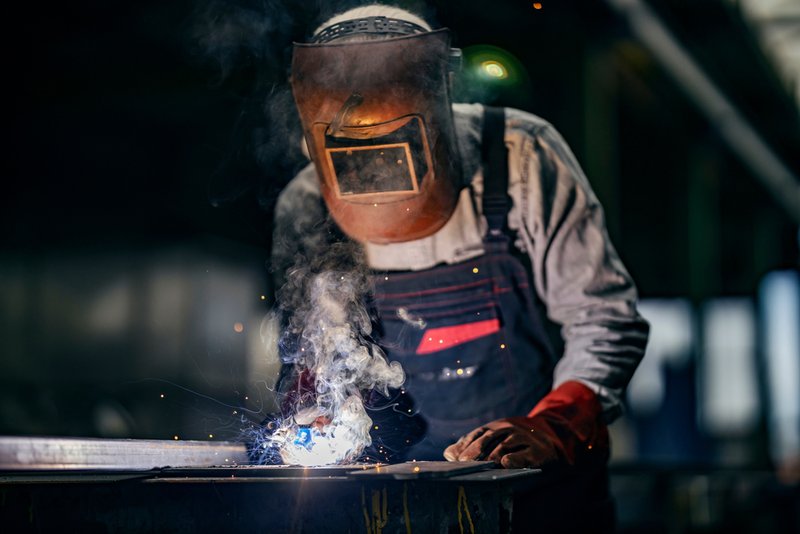
Metallurgy stops being theoretical when you see it in practice. Understanding why a joint behaved the way it did, and how to adjust for a stronger result next time, is what separates confident welders from those who rely on luck. That base knowledge, grounded in metallurgical principles, gives you the confidence to troubleshoot problems, adapt to new materials, and build consistently reliable joints.
Arclabs Welding School builds that understanding by connecting metallurgy to every weld. Instructors explain not just how to weld, but why the metal behaves the way it does and how your choices affect the outcome. This approach accelerates your progress and gives you the problem-solving foundation you need to succeed in any welding role.
Ready to build your welding foundation with confidence? Explore training programs at arclabs.edu or call 877-647-4111 to speak with an instructor about finding the right path for your welding career.

