
When you look at a sleek modern car, a kitchen refrigerator, or the metal shelving in a grocery store, you are looking at the triumphs of resistance welding. In the world of high-volume manufacturing, joining sheets of metal quickly, efficiently, and permanently is the name of the game. Two of the most dominant forces driving this sector are spot welding and seam welding;both variants of resistance welding, yet fundamentally different in execution, speed, and final application.
While they share a similar reliance on electrical resistance and heat, choosing the wrong method can mean the difference between a structurally sound product and a catastrophic manufacturing failure. One offers localized, rapid joints, while the other provides a continuous, leak-proof seal.
This article breaks down the mechanics behind both techniques, highlights their strengths and limitations, and explores how they are used to build the everyday products we rely on.
Understanding Spot Welding
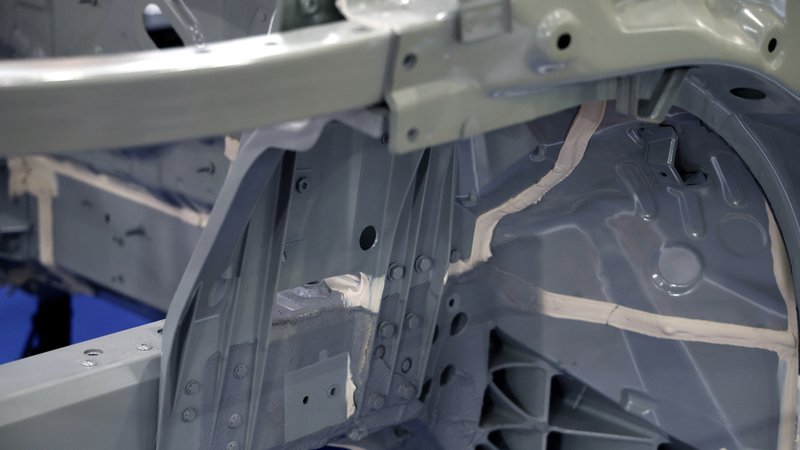
Spot welding uses two copper electrodes pressed against overlapping sheets of metal. A high electric current passes between them, generating enough heat to fuse the material at that single point. The result is a small, circular weld nugget strong, localized, and fast.
This welding method is used heavily in automotive manufacturing, appliance production, electronics assembly, and sheet metal fabrication. It's especially practical for joining thin materials where speed and repeatability matter. Modern automotive plants rely on it constantly, often through robotic systems that run hundreds of spot welds per shift.
Key characteristics of spot welding:
- Uses fixed copper tip electrodes
- Produces discrete, individual weld points
- Ideal for thin sheets typically between 0.1mm and 6mm
- High-speed and easy to automate for large production volumes
- Does not create a sealed or airtight joint
Understanding Seam Welding
Seam welding works on the same resistance principle, but instead of stationary electrodes, it uses rotating wheel-shaped electrodes. The metal passes between the wheels, and the continuous rolling contact creates either overlapping spot welds or a solid, unbroken seam. The outcome is a leak-tight joint along the full length of the material.
This makes seam welding the right choice for fuel tanks, mufflers, sealed containers, and any application where fluid or pressure containment is critical. It is slower than spot welding for small parts, but far more efficient when you need a long, continuous weld.
How They Differ in Practice
While both techniques rely on electrical resistance and applied pressure, they are distinct and non-interchangeable. Determining the correct option depends on the specific operational requirements of the final component.
| Factor | Spot Welding | Seam Welding |
|---|---|---|
| Electrode Type | Fixed copper tips | Rotating wheel electrodes |
| Weld Type | Discrete nuggets | Continuous or overlapping seam |
| Joint Sealing | Not airtight | Leak-tight |
| Best For | High-volume small parts, auto frames | Fuel tanks, pressure vessels, sealed enclosures |
| Equipment Cost | Lower | Higher initial cost |
| Material Range | Thin sheets (0.1–6mm) | Wider range of thicknesses |
For parts that only need structural strength at specific points, spot welding is faster and more cost-effective. For parts that must contain liquid or pressure, seam welding is the better choice.
Manufacturing Applications for Spot and Seam Welding
These resistance welding methods are widely utilized across different industries that shape our daily lives. In automotive production, spot welding is standard for assembling body panels, while seam welding is used for fuel tanks and exhaust components.
Appliance manufacturers rely heavily on spot welding to build frames for refrigerators and washing machines. Meanwhile, the aerospace sector deploys both techniques, choosing between them based on whether a component requires specialized point-load strength or a completely sealed enclosure.
Since neither method requires filler material, both are significantly cleaner and more efficient than typical arc welding processes. This high level of efficiency explains why resistance welding remains a fundamental standard in high-volume manufacturing environments.
Building the Foundation Before You Specialize
Spot and seam welding are specialized resistance processes. Getting there starts with mastering fundamental welding skills first. Processes like MIG, TIG, and Stick welding form the technical and hands-on foundation that most employers expect before a welder moves into automated or specialty applications.
At Arclabs, our programs are built around that foundation. We teach the core welding processes that prepare you to enter the trade with real, applicable skills. From there, you choose where to take it. Reach out to our team to learn more about your options, or call us at 877-647-4111 to speak with an advisor.

