
Orbital welding is an automated TIG welding process in which an electrode rotates 360 degrees around a fixed pipe or tube to produce consistent, high-integrity welds. Used across aerospace, pharmaceutical, semiconductor, and nuclear industries, orbital welding demands a zero-tolerance approach to precision, making strong foundational welding skills essential for anyone pursuing work in these fields.
Welders cannot perform every weld by hand. In industries where a single imperfect weld can cause contamination, leaks, or structural failure, orbital welding has become the standard. It is a highly specialized process, and understanding how it works, and where professionals use it, gives welding students a clearer picture of where the trade is heading.
The Mechanics of Orbital Welding
Orbital welding is an automated process. The welding electrode rotates 360 degrees around a stationary pipe or tube, producing a continuous, uniform weld. It typically uses the TIG (Tungsten Inert Gas) method, known for producing clean, controlled welds. A computer manages the parameters, which means the process can be repeated with very little variation from one weld to the next.

The process was first developed in 1960 by Roderick Rohrberg of North American Aviation. The original goal was to fix fuel and hydraulic fluid leaks in the X-15 rocket research plane. Since then, the technology has expanded well beyond aerospace.
Where Orbital Welding Is Used
The different industries that rely on orbital welding share one thing in common: they cannot afford inconsistency. Here is where you will find it most:
- Aerospace: Aircraft and spacecraft can contain over 1,500 welded joints. Each one must meet strict standards for strength and reliability.
- Pharmaceutical and Biotech: Welders must weld stainless steel tubing in pharmaceutical facilities in a way that prevents contamination. Orbital welding produces the smooth, clean interior surfaces these environments require.
- Semiconductor Manufacturing: High-purity gas systems used in chip production need welds that eliminate the risk of particle buildup or contaminants.
- Food, Dairy, and Beverage: Sanitation standards require welders to produce smooth, fully penetrated welds that workers can easily clean and that resist bacterial growth.
- Nuclear Piping: Leak-free pipe joints are not optional in nuclear applications. Orbital welding is used specifically to guarantee that standard.
- Power Generation: Open-head orbital systems handle larger diameter pipes used in power plants and industrial construction.
The Critical Importance of Precision
Manual welding is a skilled craft. But in high-purity environments, even a skilled welder working by hand introduces variability. Orbital welding removes that variable. The automated arc follows a precise, computer-controlled path every single time. This consistency is what makes it acceptable in industries governed by strict quality standards and regulatory oversight. It is not that human welders cannot do the work; it is that the tolerance for variation is essentially zero.
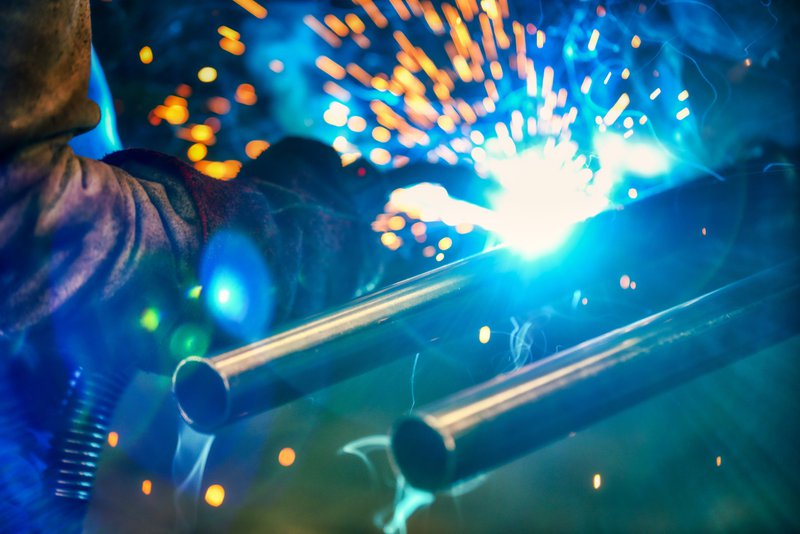
This also makes orbital welding safer for operators. In hazardous environments, automation keeps the welder away from dangerous conditions while the machine handles the joint.
Requirements for Working in This Field
Orbital welding is a specialized skill. Operators need a strong foundation in TIG welding before they can realistically work with automated orbital systems. They need to understand joint fit-up, material behavior, heat input, and how to interpret weld parameters. That base-level competency is what separates someone who can run a machine from someone who can troubleshoot one.
The path to this kind of work starts with fundamentals. You need to be comfortable at the torch before you hand control over to a system. The industries that use orbital welding are not entry-level environments. They hire welders who already understand the process deeply.
Start Building the Foundation at Arclabs
Regardless of the direction you want to take your welding career, the place to start is solid foundational training. At Arclabs, our programs are built to give you the core skills that high-demand industries expect before they invest in you further.
You will not master orbital systems in your first program. No honest school will tell you otherwise. What you will build is the competency that makes advanced specialization possible. Ready to take the first step? Contact Arclabs today or call 877-647-4111 to speak with an admissions advisor about your options.

