
While they often work side-by-side on the exact same jobsites, pipe welding and pipe fitting are distinct crafts that require very different skill sets. While a pipe fitter acts as the architect and builder of a piping system, measuring, cutting, aligning, and rigging the materials, a pipe welder is the specialist brought in to permanently fuse those joints to meet extreme pressure and safety standards.
Understanding the day-to-day duties, training requirements, and physical demands of each trade is essential to deciding which path fits your strengths, work style, and long-term career goals. Here is everything you need to know to choose the right trade for you.
The Core Realities of Pipe Welding
At its core, pipe welding is the specialized trade of creating permanent joints between pipe segments by fusing metal edges using heat. Since the resulting seams must withstand intense pressure, the integrity of the weld is critical. This is especially true in demanding systems like steam pipes, fuel lines, or high-temperature process piping where extreme forces are common.
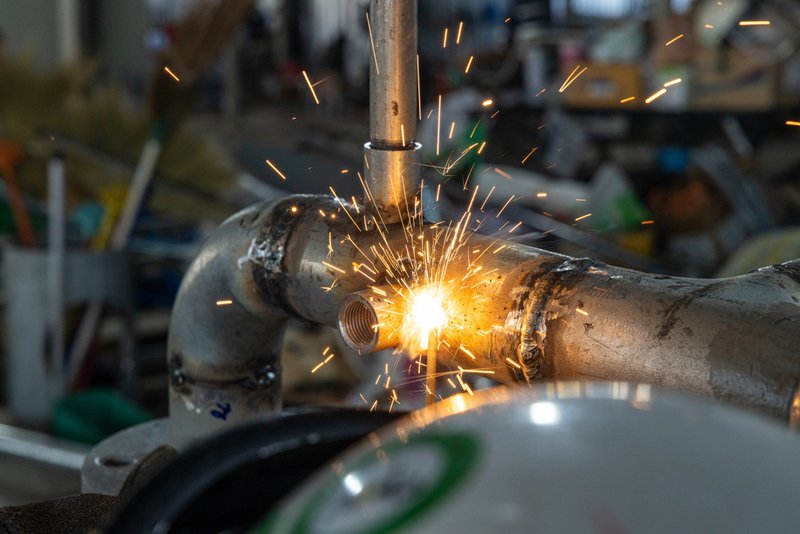
Welders rely on distinct methods such as Stick, TIG, and MIG depending on the task and material at hand. Each of these processes behaves differently on the arc, requiring a capable welder to evaluate the situation and adapt; whether a specific run demands a clean root pass inside the joint or maximum strength across thick walls.
Varying orientations introduce additional difficulty, as pipe rarely sits at a convenient angle, forcing tradespeople to learn to work flat, vertical, and even upside down. This demanding trade rewards steady hands and patience, given that a single flaw can weaken the entire joint and pose a safety risk later on. Ultimately, accuracy carries immense weight, and these core welding fundamentals shape every skilled professional in the field.
On-the-Job Duties of a Pipe Fitter
A pipe fitter builds the framework that a welder later joins. Fitters lay out, cut, and square up pipe before any arc gets struck. Their job starts with a blueprint. They measure, mark, and prep each section so it lines up correctly.
Much of the role is spatial and mechanical. Fitters thread, bend, and rig heavy pipe into position. They set the fit-up so a weld can happen cleanly. A badly aligned joint makes even great welding hard. That is why fitters and welders lean on each other.
Fitters work across a range of settings. Some spend days in a fabrication shop. Others climb scaffolding on a live plant. The role blends brain and muscle in equal measure.
Typical fitter duties include:
- Reading blueprints and isometric drawings to plan each run
- Measuring, cutting, and threading pipe to spec
- Bracing sections so joints sit square
- Preparing the bevels and gaps a welder needs
- Coordinating with other trades on sequence and timing
Key Differences Between Pipe Welding and Pipe Fitting
While both trades reward problem solving on the same project, their core focus and required skill sets diverge significantly. Welding is all about fusion, demanding years of practice to refine torch control and bead consistency directly at the join. In contrast, fitting centers on assembly and positioning, requiring sharp math, measurement, and blueprint literacy to get the layout ready.
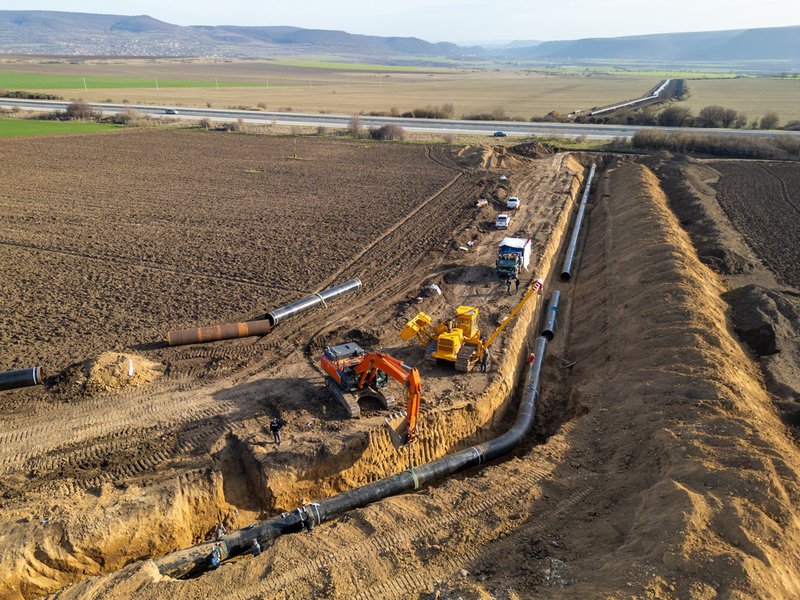
Despite these distinct paths, significant overlap exists in the field, and many professionals handle both roles. Some crews expect fitters to occasionally run a bead, while welders often manage their own fit-up on smaller jobs. Because of this, picking up hands-on welding training makes a fitter far more versatile on site.
At a glance, here is how the roles line up:
- Pipe welder: fuses joints and guards weld quality
- Pipe fitter: lays out and assembles the run, guarding fit and alignment
- Shared ground: blueprint awareness, safety habits, and teamwork
Both trades feed the same industries. Energy, refining, shipbuilding, power generation, and heavy construction all depend on sound piping. Demand shifts with projects and regions. Staying adaptable keeps you working across many of them.
How to Decide Which Trade Suits You
Your choice comes down to how your mind works. Do you love the focus of laying a flawless bead? Pipe welding might be your calling. Do you enjoy planning, measuring, and cracking layout puzzles? Pipe fitting could serve you better.
Here is the honest part. You do not have to settle everything on day one. Both paths grow from the same foundation. A firm grasp of welding basics helps you either way. Curiosity and grit carry you further than raw talent. Even fitters gain from understanding how a weld behaves.
That groundwork matters more than any single specialty. Higher-paying niches like high-pressure or exotic-alloy work do exist. Those doors tend to open only after you master the essentials first. Arclabs centers its teaching on that preparation. Our structured welding programs help you establish the core skills the trade is built on.
Still Deciding Between Welding and Fitting? Let's Talk
Still weighing pipe welding against pipe fitting? You don’t have to navigate your path alone. We can walk you through what each path asks of you. We can also show how our courses build the skills and knowledge both trades depend on.
Reach out to Arclabs or call 877-647-4111 to speak with an admissions advisor. Together, we will find the welding education option that matches your goals.

