
The Port of Houston serves as a major commercial artery for North America, driving continuous demand for skilled labor across shipyards and marine fabricators. For individuals exploring welding jobs, the Gulf Coast maritime sector presents a practical entry point into industrial fabrication and repair.
Understanding how shipyards operate, what processes employers prioritize, and how foundational training fits into this ecosystem helps aspiring craftspeople map out a clear career path.
The Operational Scope of Gulf Coast Maritime Facilities
The Houston Ship Channel and the broader Gulf Coast host a vast network of commercial shipyards, dry docks, and marine fabrication yards. These facilities handle a distinct mix of vessel construction, maintenance, and industrial marine infrastructure.
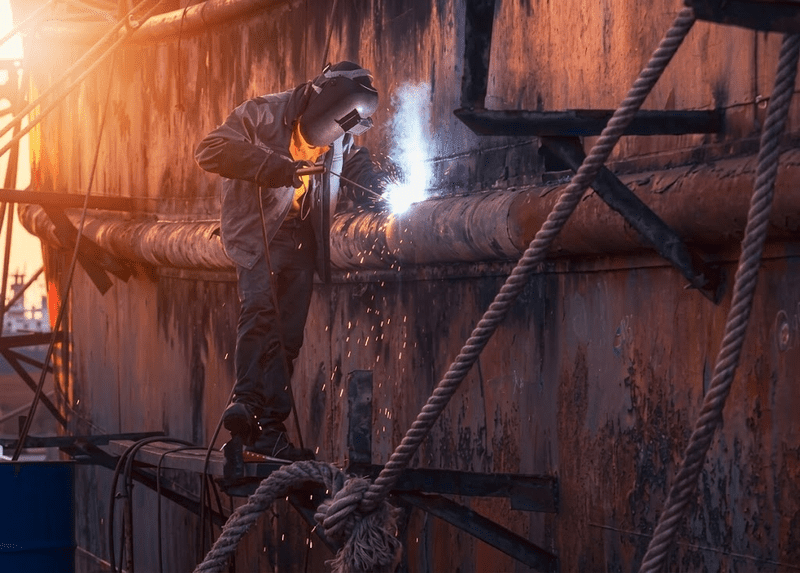
Shipyards divided into new construction and repair sectors require different operational focus:
- New Construction Yards. Focus on assembling vessel hulls, barges, tugboats, and offshore support structures from raw steel plate and structural shapes. Work centers on large-scale fit-up, long continuous welds, and assembly line progression.
- Repair and Dry Dock Facilities. Handle emergency hull repairs, structural retrofits, and scheduled coast guard inspections. Technicians cut away damaged steel sections, align replacement plates, and complete structural welds on existing working vessels.
- Marine Fabrication Shops. Build specialized sub-assemblies, deck equipment, piping systems, and offshore platform components in controlled indoor environments prior to yard integration.
Each environment presents distinct working conditions. Welders in dry docks often navigate confined spaces, work at heights on scaffolding, and adapt to changing weather conditions outdoors.
Core Welding Processes Used in Shipyard Environments
Maritime applications demand high-quality structural joints capable of withstanding constant hydrodynamic stress and corrosive marine environments. Shipyards rely on several core arc welding processes rather than exotic techniques for everyday structural assembly.
Flux-Cored Arc Welding (FCAW)
Flux-Cored Arc Welding stands as the primary process for heavy marine structural work. Shipyards prefer FCAW because of its high deposition rates, allowing welders to deposit more filler metal per hour than Stick welding. The flux inner core provides shielding gas and slag cover, making gas-shielded or self-shielded variants reliable when joining thick steel plates on hulls and bulkheads.
Shielded Metal Arc Welding (SMAW / Stick)
Despite automation trends, Stick welding remains indispensable in repair yards. SMAW equipment is highly portable and requires no external shielding gas tanks, making it ideal for tight spaces onboard ships, windy outdoor docks, and locations with minor surface rust or paint residue.
Gas Metal Arc Welding (GMAW) & Gas Tungsten Arc Welding (GTAW)
GMAW (MIG) sees widespread use in enclosed fabrication shops for sub-assemblies, while GTAW (TIG) is reserved for specialized applications like stainless steel piping, aluminum superstructure components, or high-integrity root passes.
Technical Competencies Employers Expect
Landing entry-level welding jobs in the maritime industry requires more than knowing how to pull a trigger or strike an arc. Shipbuilders expect candidates to demonstrate solid fundamental habits before putting them on a production floor.
- Multi-Position Proficiency. Welders must comfortably execute sound welds in flat (1G/1F), horizontal (2G/2F), vertical (3G/3F), and overhead (4G/4F) positions on plate steel.
- Blueprint Reading & Symbols. Understanding weld symbols, joint geometry, and tail notes ensures that welds meet specified throat thickness and pitch without over-welding.
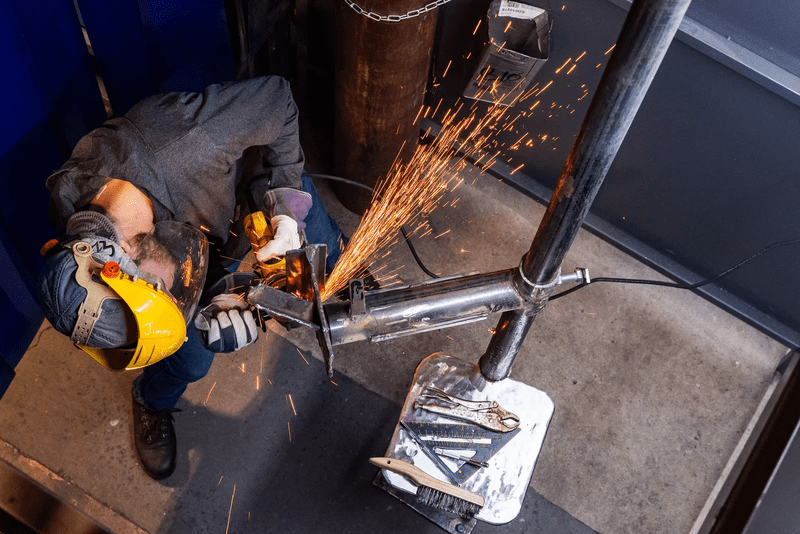
- Thermal Cutting & Surface Prep. Proper joint preparation using oxy-fuel torches and angle grinders directly impacts weld quality. Contaminated joint faces lead to porosity and cracking defects.
- Safety Awareness. Respecting confined space protocols, hot work permits, and proper personal protective equipment (PPE) remains mandatory across all Gulf Coast facilities.
Employers conduct site-specific practical weld tests (such as AWS D1.1 structural plate tests) during the hiring process. Passing these tests requires consistent puddle control, correct travel speed, and proper joint fit-up.
Career Progression: From Base Skills to Specialization
A common misconception among prospective tradespeople is that trade school immediately turns a beginner into a specialized master pipe welder or senior quality inspector. Realistically, trade education establishes the critical baseline skills necessary to enter the industry safely and productively.
Entry-level workers typically start as structural tackers or junior welders. As they gain real-world shop experience and demonstrate reliability, employers often provide opportunities for specialized internal testing or advanced certifications.
Building a long-term trade career follows a steady progression:
- Foundational Training. Mastering base processes, machine setup, safety, and puddle control in an educational setting.
- Entry-Level Placement. Securing initial welding jobs as a structural welder, tacker, or fitter assistant in a production yard.
- On-the-Job Skill Refinement. Adapting base skills to real-world fit-up tolerances, positional challenges, and production pace.
- Advanced Specialization. Earning specific yard certifications for pipe welding (6G position), non-destructive testing (NDT) inspection, or supervisory roles.
Setting Your Anchor in the Trade
Navigating the transition into industrial welding jobs requires structured, focused training. Arclabs Welding School equips students with the essential hands-on booth time, machine setup knowledge, and multi-process skills required to establish base welding proficiency. This solid foundation prepares graduates to take on employer-specific weld tests and continue their professional development on the job.
Instructors bring real-world industry background into the booth, guiding students through proper techniques in SMAW, GMAW, FCAW, and GTAW. By spending the majority of class time practicing welds, students gain the confidence needed to enter the workforce with a firm grasp of trade fundamentals.
Reach out to the Arclabs team to learn about our programs, class schedule options, and campus locations. Send us a message, or call 877-647-4111. We’d love to hear from you.
Frequently Asked Questions
Do shipyards hire welders with no prior marine experience?
Many do, particularly for entry-level fabrication and repair support roles. Employers generally look for solid fundamentals and a willingness to learn yard-specific procedures on the job.
Is confined space work required in shipyard welding?
Often, yes. Tank and void space entry is common in vessel repair. Employers provide the required safety training, monitoring, and permitting before entry.
What is the difference between a shipyard and a fabrication shop?
Fabrication shops typically build components in controlled indoor conditions. Shipyards assemble and repair complete vessels, frequently outdoors and in variable positions.
Does maritime welding involve travel?
Some roles do. Repair crews occasionally travel to vessels docked elsewhere along the coast. Most yard positions are based at a single facility.
How physically demanding is maritime and shipyard welding work?
It is demanding. Expect heat, climbing, carrying equipment, and long periods in awkward positions. Physical conditioning helps considerably.

