
Every welder eventually faces the frustration of bad welds, whether caused by porosity, cracking, or poor penetration. When structural defects threaten the integrity of a joint, air carbon arc gouging (CAC-A) is the fastest, most effective way to blast away compromised metal and start fresh.
Operating at deafening volumes with high-amp arcs and concentrated streams of compressed air, this process melts defective welds in seconds and forcibly blows the molten slag away. CAC-A isn't subtle, but for heavy fabrication, repair, and beveling, no other tool removes metal with such ruthless speed and efficiency.
What Is Air Carbon Arc Gouging?
Air carbon arc gouging (CAC-A) is a high-speed thermal cutting process designed to gouge out, sever, or remove metal using an intense electric arc combined with a jet of high-pressure compressed air. Unlike standard arc welding, which joins metal, or oxy-fuel cutting, which relies on a chemical oxidation reaction, gouging uses sheer heat and physical force to sweep material away.

The core mechanics rely on four main elements working simultaneously:
- Carbon-Graphite Electrode: A consumable rod (typically copper-coated to improve conductivity and extend life) holds an intense electric arc against the workpiece.
- Extreme Thermal Energy: The arc generates temperatures exceeding 6,000°F (3,300°C), instantly melting a localized pool of metal.
- Continuous Compressed Air: A specialized torch houses air jets aligned directly behind the carbon electrode. Compressed air (typically 80 to 100 PSI) blasts through these orifices, blowing liquid metal out of the joint before it can re-solidify.
- High-Current Power Supply: Driven by heavy-duty DC constant-current welding machines, the process requires high amperage, ranging from 200 A for thin work up to 1,000+ A for industrial heavy plate removal.
Since CAC-A relies on thermal melting rather than oxidation, it works across almost all conductive metals, including carbon steel, stainless steel, cast iron, copper, and aluminum alloys.
Grinding accomplishes similar work, but runs much slower and produces heavy dust volumes relative to the metal removed. Shops rely on the process for backgouging root passes, removing tack welds, cutting out defects, and stripping worn hardfacing. Field crews utilize it on pipe, structural steel, heavy plate, and cast iron repairs. The groove typically requires a light grind before rewelding, but the heavy metal removal is already complete.
Equipment Setup Without Shortcuts
Rooting out bad welds requires high-volume power and uninterrupted airflow. Most gouging operations run off a constant direct current (DC) power source set to direct current electrode positive (DCEP) polarity. Your machine must reliably deliver the required amperage for your chosen electrode size at a high duty cycle. An undersized unit will overheat, drop voltage, and stall out mid-pass, leaving an incomplete groove and embedded carbon behind.
The gouging torch locks the electrode in place and directs high-pressure air through targeted nozzles positioned directly behind the arc. Your cables, hoses, and work clamps must be sized to handle heavy current draw without voltage drops. Position the work clamp as close to the joint as possible to maintain a stable, predictable arc.
Before striking an arc, establish these non-negotiable setup habits:
- Match your amperage directly to the electrode diameter using manufacturer specifications.
- Set initial electrode stickout between 3 and 4 inches, resetting the rod as it consumes.
- Align the air jets directly under the electrode, pointing straight toward the tip.
- Verify that your air supply delivers clean, dry air free of moisture and oil contamination.
- Clear all combustible materials and set up fire blankets within the spark radius.
Building these habits in a structured hands-on environment ensures you enter the shop floor with the discipline employers demand.
Optimizing Air Pressure and Selecting Carbon Electrodes
Air volume drives metal removal just as much as electric current. Standard industrial torches require 80 to 100 PSI (pounds per square inch) delivered consistently at the head. Lighter-duty setups can run on 40 to 60 PSI, but cubic feet per minute (CFM) remains the critical metric. This metric measures the volume of air the compressor can supply every minute.
While pressure (PSI) provides the force, CFM determines if there is enough total air volume to continuously displace the molten metal. If the CFM is too low, the air will fail to clear the channel, leaving slag and creating new bad welds that require rework.
Electrode selection directly impacts your removal rate and groove geometry:
- Pointed Copper-Coated Carbons: The industry standard for repair work. The copper coating improves electrical conductivity, reduces heat build-up at the torch jaw, and maintains rod diameter over long runs.
- Plain Uncoated Carbons: Burn back faster and generate more heat along the rod body. Best reserved for quick, light-duty applications or specific non-ferrous work.
- Flat Carbons: Shaped to remove thin, wide passes. Ideal for washing away old weld reinforcement or dressing surface defects without digging deep root channels.
- AC Carbons: Formulated with rare-earth additives to stabilize the arc when operating on alternating current power sources. They are not interchangeable with standard DC rods.
Smaller rods (1/8 to 3/16 inch) allow precise control when removing bad welds in tight joints or thin plates. Larger diameters (3/8 inch and above) consume hundreds of amps to carve deep grooves in structural steel and heavy equipment repairs.
Essential Safety Practices for High-Energy Gouging
Air carbon arc gouging is one of the harshest processes in heavy fabrication. The process produces intense ultraviolet light, heavy metal fumes, and a continuous stream of molten slag traveling at high velocity. Protecting yourself and the shop environment requires total compliance with safety protocols.
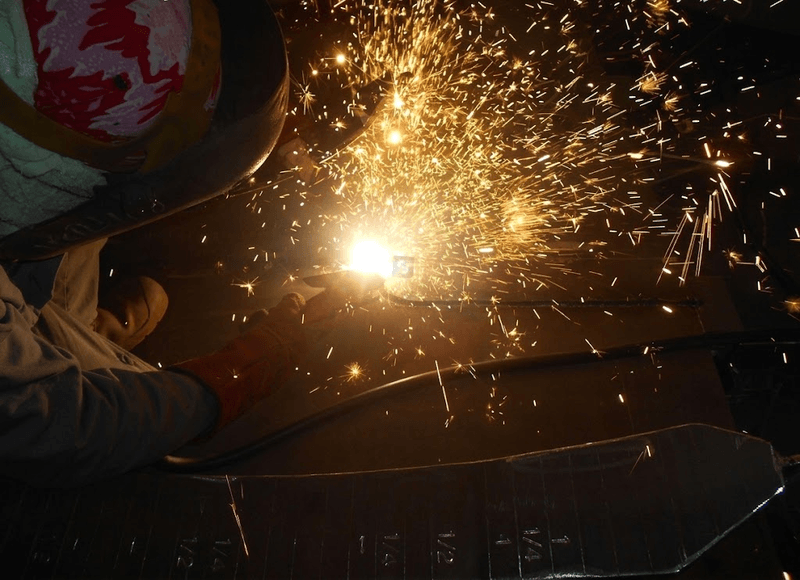
- Hearing Protection: Arc gouging routinely exceeds 100 decibels. Dual protection (earplugs paired with over-ear muffs) is recommended for extended gouging operations.
- Eye and Face Protection: The radiant energy from a high-amp carbon arc requires a shade 12 to 14 welding lens, paired with safety glasses underneath the helmet.
- Protective Clothing: Heavy split-cowhide leather jackets, gauntlet gloves, and leather spats are mandatory. Open pockets, rolled cuffs, or synthetic fabrics will catch flying molten metal instantly.
- Fume Extraction: High amperage burns off base metal, coatings, and carbon rapidly. Always utilize localized exhaust arms or fitted respirator systems in confined or semi-enclosed spaces.
- Post-Gouging Inspection: After removing bad welds, thoroughly grind the resulting channel with a hard wheel. This removes the thin carbonized layer left on the base metal, preventing severe cracking when you re-weld the joint.
Respecting the equipment and mastering these safety measures ensures you can perform aggressive metal removal operations efficiently without risking injury or rework.
Build Your Foundation with Arclabs Welding School
Removing bad welds efficiently is a critical skill on any job site, but mastering gouging starts with a solid foundation in core joining processes. At Arclabs Welding School, we focus on delivering the practical, hands-on training you need to master SMAW, GMAW, GTAW, and FCAW before stepping into specialized industrial applications.
Our instructors bring real-world shop experience into the booth, teaching you equipment setup, safety, and metal preparation the right way from day one. Whether you are starting a new career or building the core abilities employers look for, Arclabs provides honest, grounded education designed for the modern welding industry.
Talk With an Admissions Advisor About Career Training
Take the first step toward a career in the welding trade. Contact an Arclabs admissions advisor today to learn more about our training programs, campus locations, and hands-on curriculum. Call 877-647-4111 or visit our contact page to discuss your career goals and schedule a campus tour.
Frequently Asked Questions
Can you use air carbon arc gouging on metals other than carbon steel?
Stainless steel, copper alloys, and cast iron respond to the process with adjustments to technique and settings. Aluminum presents a poor fit that creates defective joints, so shops rely on plasma cutting or mechanical removal instead.
How does air carbon arc gouging compare to plasma arc gouging?
Plasma cutting runs quieter, produces a cleaner groove, and leaves no carbon deposits behind. Air carbon arc gouging removes heavy metal faster and requires lower equipment setup costs.
What causes a wavy groove during air carbon arc gouging?
Inconsistent travel speed and shifting torch angles create irregular cuts. Excessive electrode stickout also causes the rod to wander mid-process.

