
Some of the most demanding pipe welding in the energy sector happens at temperatures colder than anything found in nature. Liquefied natural gas (LNG) is stored and transported at roughly -260°F (-162°C). Ordinary carbon steel turns brittle long before it reaches that range, making standard materials useless for cold containment.
Cryogenic tanks and transfer lines rely instead on 9% nickel steel joined with tungsten inert gas (TIG) welding, also known as gas tungsten arc welding (GTAW). Mastering specialized applications like these requires absolute precision, zero tolerance for shortcuts, and a deep respect for procedural discipline.
Why 9% Nickel Steel Survives Extreme Cold
Nickel fundamentally changes how steel behaves when temperatures drop. A quenched and tempered plate carrying roughly 9% nickel holds its impact toughness far below zero. That mechanical property explains why materials such as ASTM A553 plate and A333 Grade 8 pipe show up consistently in major LNG storage terminals and cold transfer lines.
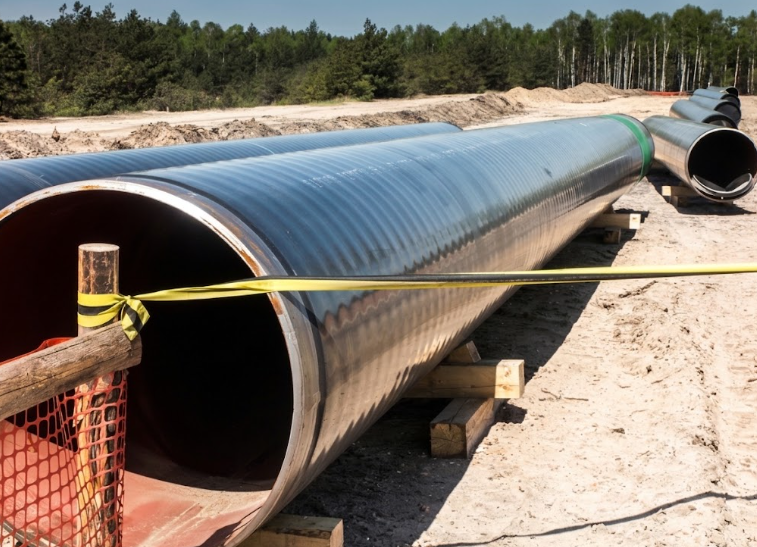
Nickel steel is not the only option for low-temperature service. Austenitic stainless steels and 5083 aluminum also serve well, particularly in smaller pressure vessels or marine fuel systems. However, 9% nickel steel earns its place in large land-based tanks because it delivers exceptional tensile strength without requiring excessive wall thickness. High strength allows engineers to design lighter, highly efficient structures capable of withstanding massive hydrostatic loads.
Standard demand for this material sits firmly with LNG export terminals, industrial gas suppliers, and air separation facilities. Emerging sectors like clean hydrogen and ammonia infrastructure draw on overlapping cold-service engineering principles. While those markets present steady future possibilities, the core work remains centered on established global energy logistics.
Non-Matching Filler Metals in Cryogenic Applications
Most cryogenic joints in 9% nickel steel are filled with nickel-based alloys rather than matching base metal chemistries. Common selections include ERNiCrMo-3 and ERNiCrMo-4 wire under the American Welding Society (AWS) A5.14 classification. Using a matching 9% nickel filler tends to fall short on impact toughness once deposited, which defeats the purpose of choosing high-nickel base plate.
This metallurgical reality directly changes how a welder operates at the torch:
- Sluggish Puddle Behavior: Nickel-alloy puddles flow much less fluidly than carbon steel. The molten metal will not automatically wash out to the joint toe, requiring deliberate, precise hand manipulation.
- Tight Arc Lengths: Since the puddle is sluggish, keeping a tight arc is essential to maintain shield gas coverage and direct heat exactly where it belongs.
- Mismatch in Deposit Strength: Deposit strength can sit slightly below base metal strength. Engineers account for this in joint design, while welders answer it with meticulous fill passes and accurate bead placement.
Developing clean torch habits and understanding puddle physics starts early. Building that muscle memory is a core focus across foundational pipe welding training programs.
Crack Mitigation Rules on Cryogenic Projects
Nickel weld metal is inherently susceptible to hot cracking and solidification issues. On job sites, written welding procedure specifications (WPS) are crafted to prevent these failures, and quality inspectors check every variable.
- Rigorous Surface Cleanliness: Oil, grease, moisture, sulfur-bearing marking paint, and grinding residue must be completely removed before striking an arc.
- Strict Heat Input Limits: Welders run straight stringer beads, restrict weave width, and closely monitor interpass temperatures to preserve base metal toughness.
- Pure Argon Root Purging: Argon backing gas shields the underside of the pipe joint to guard against internal oxidation during the root pass.
- Demagnetization Protocols: Residual magnetism in nickel steel causes severe arc blow, making pre-weld demagnetization a routine setup requirement.
- Avoidance of Post-Weld Heat Treatment (PWHT): Thermal stress relief is frequently avoided because improper heating can degrade the very properties the steel was selected for.
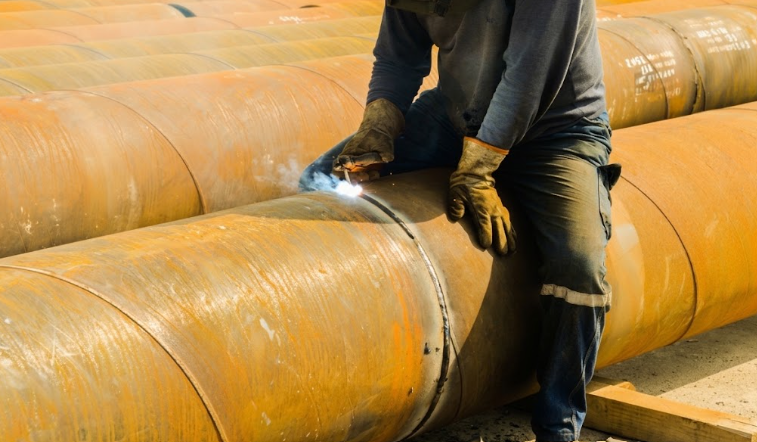
Nothing is left to guesswork in critical pipe welding operations. The written procedure governs the work, and following it to the letter is a non-negotiable standard of the trade.
The Mindset Behind Specialized Pipe Welding
Cold-service pipe welding is a specialized career destination, not an entry-level starting point. Welders earn access to these assignments after proving consistent reliability on standard carbon and stainless steel projects.
The traits that help craftsmen succeed in high-stakes environments include:
- Consistent Torch Control: The ability to execute repeatable hand travel speeds and maintain uniform arc length under tough position constraints.
- Procedural Literacy: Reading structural code sheets, understanding variables, and staying strictly inside designated parameters.
- Patience and Focus: Managing a slow, heavy puddle without rushing or overheating the joint.
- Receptive Mindset: Welcoming non-destructive examination (NDE) feedback, visual inspection, and continuous quality refinement.
High-spec fields often command strong wages, but earnings vary widely based on region, employer, certification level, and project schedules. The clearest path forward relies on mastering basic pipe fit-up, open-root passes, position welding, and sound TIG technique. Those core competencies form the bedrock of the trade.
Build Your Foundation at Arclabs
If high-integrity pipe welding on advanced projects sounds like the right career path, your journey starts with core hands-on instruction. You need dependable, tested skills before any site manager trusts you near critical energy infrastructure.
Arclabs Welding School focuses directly on that essential foundation. We deliver intensive hands-on hours, comprehensive TIG and pipe training, and practical instruction from experienced trade professionals. Arclabs does not provide highly specialized niche certifications; instead, we provide the foundational courses required to establish core welding skills before specializing later in your career.
Take the first step toward a grounded career in the skilled trades. Contact an admissions advisor online or call 877-647-4111 to discuss program lengths, hands-on lab schedules, and campus locations.

