
Modern city skylines rely on precise engineering and skilled craftsmanship. Professional structural welding serves as the fundamental link holding heavy steel frameworks together hundreds of feet in the air. High-rise construction presents distinct technical challenges, from extreme wind resistance to heavy load distribution. Understanding how ironworkers, engineers, and fabricators erect commercial skyscrapers offers valuable context for anyone considering a path into the welding trade.
The Critical Role of Structural Welding in Skyscraper Engineering
Skyscrapers do not stand rigid against natural forces. They flex. Engineers design structural steel framing to absorb lateral movement from wind gusts and seismic activity while bearing massive gravity loads. Bolted connections secure many secondary members, but critical moment connections depend heavily on full-penetration welds.
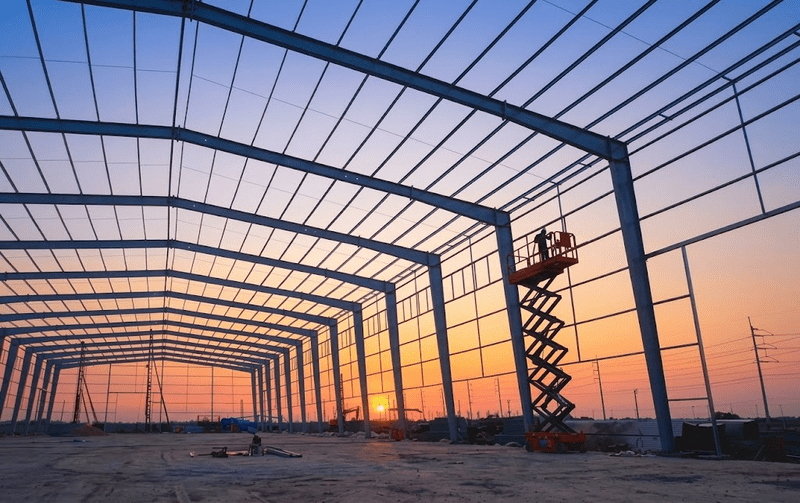
Welded joints join heavy steel beams directly to vertical columns, creating a single continuous structure. This monolithic framework distributes stress efficiently throughout the entire building matrix. Since a single point of failure in a primary load-bearing joint jeopardizes structural integrity, field crews must execute every weld pass with total accuracy.
Primary Processes in Commercial High-Rise Construction
Fabricators and field erectors deploy specific welding processes based on location, joint geometry, and ambient conditions.
Field Erection Processes
- Flux-Cored Arc Welding (FCAW). Construction crews widely use self-shielded FCAW (FCAW-S) for field erection. The process carries its own flux shield inside the wire electrode, which prevents wind from blowing away protective shielding gas hundreds of feet above ground. Its high deposition rate allows ironworkers to complete heavy plate splices efficiently.
- Shielded Metal Arc Welding (SMAW). Often called stick welding, SMAW remains an essential field process. Its portable equipment and versatility make it ideal for tight access points, out-of-position field modifications, and structural tacking.
Shop Fabrication Processes
- Gas Metal Arc Welding (GMAW). Fabrication facilities utilize GMAW (MIG) in controlled indoor environments to build massive steel trusses, box columns, and girder assemblies before trucking them to the job site.
- Submerged Arc Welding (SAW): Shop fabricators use automated SAW setups to lay long, heavy continuous welds on thick plate girders with minimal operator fatigue and high deposition.
Proper thermal management supports these processes. Thick structural steel plates absorb heat rapidly, creating risks of hydrogen cracking. Welders must preheat thick base metals and maintain strict interpass temperatures to ensure proper ductility and joint strength.
Quality Control and Inspection Standards
High-rise structural welding operates under strict safety and regulatory frameworks, primarily governed by the American Welding Society (AWS) D1.1 Structural Welding Code. Inspectors monitor field operations closely to verify that every critical joint meets engineering specifications.
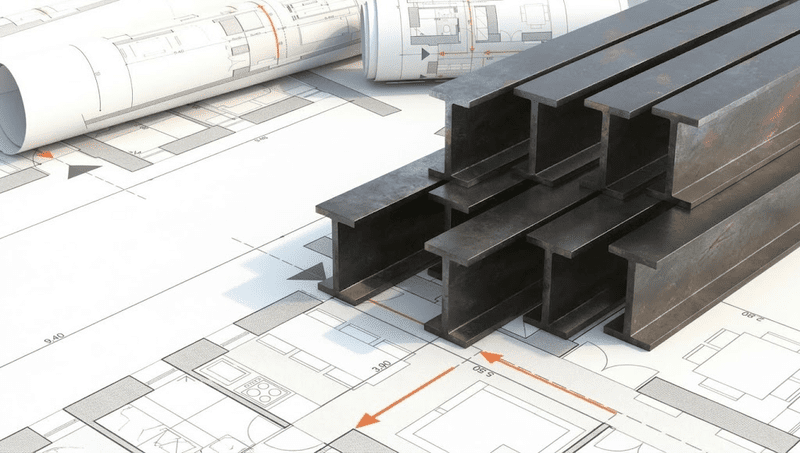
Before making a single arc, welders working on structural jobs must hold valid performance qualifications for specific welding processes, positions, and thickness ranges. Once welded, critical connections undergo rigorous Non-Destructive Testing (NDT) methods:
- Visual Testing (VT). Inspectors check surface profile, undercut, bead shape, and joint alignment.
- Ultrasonic Testing (UT). High-frequency sound waves travel through the metal to detect internal discontinuities like lack of fusion or porosity without damaging the weld.
- Magnetic Particle Testing (MT). Magnetic fields and fine iron particles reveal fine surface and near-surface cracks in ferromagnetic steel.
Building a Career in the Trades
The commercial construction sector relies on steady, competent labor to maintain project timelines. While skyscraper construction demands advanced field qualifications, every experienced structural welder started by mastering fundamental torch control, puddle manipulation, and joint setup in an entry-level environment.
Understanding base metal behavior, reading blueprints, and executing consistent welds in multiple positions form the core skill set every welder needs. Once a trainee masters basic process mechanics, they can pursue specialized field credentials required by contractors and regional building codes.
Start Your Journey
At Arclabs Welding School, we focus on building solid, real-world skills from the ground up. Our structured courses cover core processes like SMAW, GMAW, and FCAW, helping you develop the confidence, safety habits, and technical foundation needed before taking on specialized trade pathways.
Ready to take your first step toward a career in the trades? Contact Arclabs Welding School by sending us a message, or calling 877-647-4111 to schedule a campus tour or explore our welding programs.

