
Sheet metal fabrication demands precise dimensional control, yet heat-driven processes like welding and thermal cutting inherently introduce structural challenges. Uncontrolled thermal expansion causes localized movement within the metal, frequently leading to angular distortion, buckling, and persistent warpage in the final assembly.
Understanding how heat affects metallic microstructures and structural integrity is essential for preventing these defects and for leveraging controlled heating, such as flame straightening, to correct them. By applying targeted thermal management and mitigation strategies, fabricators can maintain strict tolerances, minimize scrap rates, and correct existing deformities without compromising structural integrity.
Why Thin Sheet Metal Reacts Instantly to Heat
Material thickness dictates how a weldment responds to energy input. A thick plate absorbs heat throughout its mass before showing visible movement. Conversely, a 16-gauge panel lacks the volume to distribute that thermal load. Heat spreads rapidly across the surface, causing the material to react immediately.
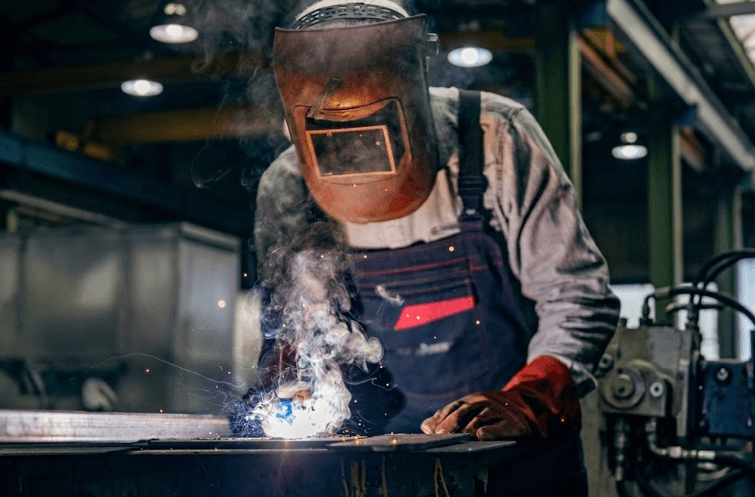
When localized thermal expansion occurs during welding, three primary movement patterns develop across the work table:
- Transverse Shrinkage: Pulls the joint tighter perpendicular to the weld seam.
- Longitudinal Shrinkage: Shortens the component along the length of the weld path.
- Angular Distortion: Lifts the edges of the plate, turning a flat sheet into a shallow dish or peak.
Material selection further influences this movement. Aluminum exhibits higher rates of thermal expansion than carbon steel at equivalent temperatures. Stainless steel features lower thermal conductivity, causing heat to concentrate near the joint rather than dissipating. Operating variables such as travel speed, arc length, and electrode angle directly govern how much energy enters the base metal.
Sequence, Symmetry, and Process Selection
Where you place each pass shapes the final geometry of the part. Running a continuous bead down a long seam introduces high heat input, causing severe bowing. Alternate welding techniques help control heat distribution across the workpiece:
- Skip Welding: Breaks the seam into short, spaced segments. Each segment cools while you move to another section of the joint, preventing heat buildup.
- Back-Step Welding: Deposits short beads in the direction opposite to the overall travel path. This technique spreads energy across the joint instead of concentrating it at one end.
- Balanced Sequence: Alternates passes on opposite sides of a double-sided joint. Balancing shrinkage forces along the neutral axis keeps the assembly flat.
- Outward Tack Placement: Secures the fit-up starting from the center and moving outward toward both edges.
Process selection also affects the total heat input into the material. Modes designed for lower average energy, such as pulsed MIG welding, reduce the localized thermal expansion that leads to sheet metal warpage.
Clamping, Fixturing, and Heat Sinks
Mechanical restraint holds components in position while the weld pool cools, but restraint alone does not eliminate shrinkage forces. Instead, clamping redirects those forces into residual stress, which can cause movement later when the part is unclamped or machined.
Fabricators use several standard shop practices to minimize movement:
- Strongbacks: Stiffeners bolted or tack-welded across a joint to resist angular distortion.
- Backing Bars: Copper or aluminum bars placed behind the joint to draw heat away from the root.
- Chill Blocks: High-conductivity metal blocks clamped adjacent to the seam to narrow the heat-affected zone.
- Fixtures: Dedicated assemblies that hold multiple components in precise alignment throughout the welding cycle.
Proper fit-up remains essential. Tight joint preparation minimizes the amount of filler metal required. Depositing less filler metal yields less overall shrinkage across the joint.
Flame Straightening: Using Controlled Heat to Correct Distortion
When a component distorts out of tolerance, flame straightening provides a method to pull it back into alignment. The process relies on localized thermal expansion working in reverse.
By applying heat to a small, targeted area with an oxy-fuel torch, the surrounding cold metal resists the expansion of the heated spot. This resistance causes the hot metal to yield and thicken (upset). As the spot cools, it contracts further than it expanded, drawing the surrounding material toward the heated point.
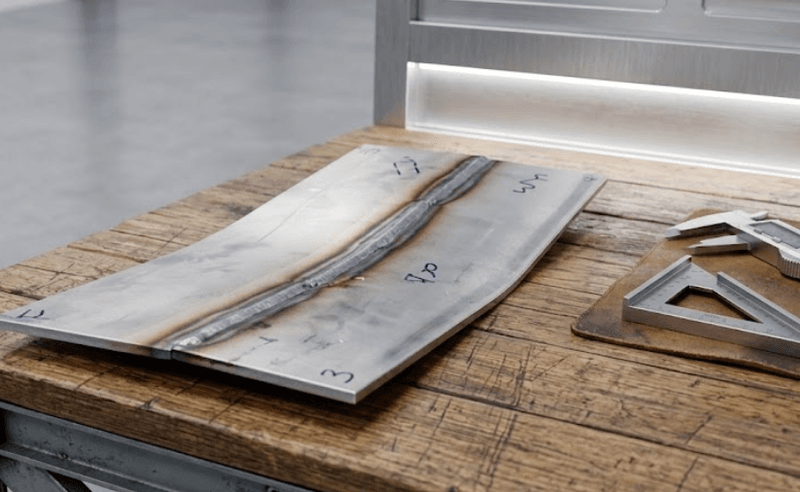
Common flame straightening patterns include:
- Spot Heating: Corrects localized bulges or oil-canning in flat panels.
- Line Heating: Corrects angular distortion along plate edges or structural members.
- Wedge Heating: Applies triangular heat patterns to bring long structural profiles back to straight.
Temperature control is critical during this process. On carbon steel, heating the material to a dull red range provides sufficient movement without altering the mechanical properties of the base metal. Temperature-indicating crayons provide an accurate reference to avoid overheating.
Aluminum and stainless steel require specialized handling due to different thermal characteristics and lack of color change when heated. Flame straightening serves as a corrective measure, but preventing distortion through proper sequence and heat management is always the more efficient approach.
Building Base Skills at Arclabs
Mastering heat control, torch technique, and material management requires structured, hands-on practice.
Arclabs Welding School provides practical training to help students establish the entry-level welding skills needed across the metal fabrication industry. Before specializing in advanced field techniques or specialized alloy fabrication, welders must first understand how metal behaves under an arc. Our curriculum focuses on hands-on booth time, teaching students to control heat input, read fit-up requirements, and execute proper welding sequences on real equipment.
Contact an admissions representative at 877-647-4111 or visit the Arclabs contact page to learn more about training options, campus locations, and class schedules.

