
If you are exploring competitive welding jobs, field maintenance on heavy machinery offers one of the most challenging and rewarding avenues in the skilled trades. When an excavator boom cracks on a busy job site or a bulldozer bucket wears down to the frame, operations stall. Every hour of downtime costs thousands of dollars. Field maintenance welders step in to diagnose, repair, and reinforce essential equipment right where it breaks down.
Working in field maintenance demands a distinct combination of technical knowledge, physical adaptability, and trade confidence. Understanding what the role requires helps prospective students decide if this career path aligns with their personal strengths and career goals.
Shop Welding vs. Field Maintenance: Understanding the Environment
In a manufacturing or fabrication shop, welding conditions remain largely controlled. Welders work indoors at clean tables, using pre-cut materials and positioned jigs. Field repairs operate under entirely different conditions. Mobile technicians travel directly to construction sites, quarries, or infrastructure projects to fix active machinery.
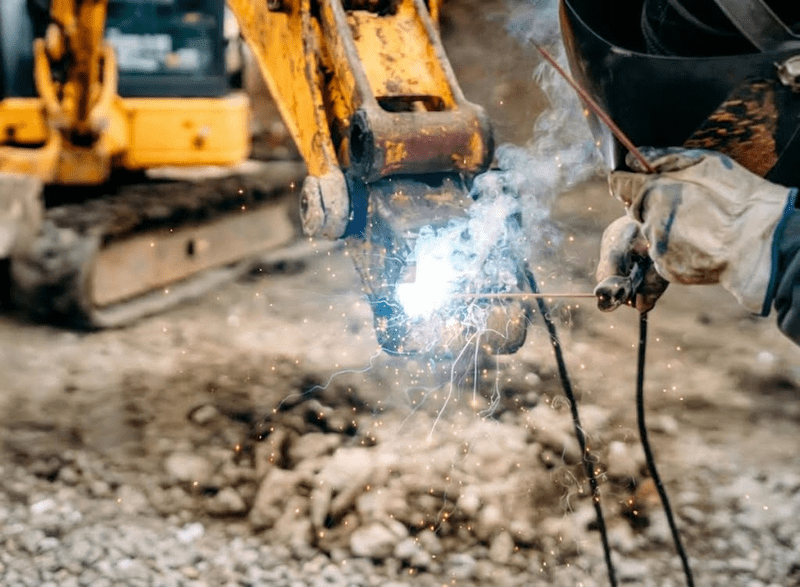
Field maintenance welders face distinct operational challenges:
- Unpredictable working conditions. Repairs often happen outdoors in rain, heat, mud, or cold. Technicians must secure their work area, manage wind interference during shielded processes, and maintain strict safety measures on active job sites.
- Non-standard welding positions. Equipment rarely breaks in easily accessible locations. Welders frequently execute vertical, horizontal, and overhead welds while working under a chassis, inside a hopper, or high above the ground.
- Complex material prep. Before laying a pass, technicians must clean rusted surfaces, grind out fatigue cracks, and bevel thick steel joints to ensure deep weld penetration.
Core Technical Skills Required for Heavy Equipment Repair
Heavy machinery subject to severe stress requires heavy-duty repair techniques. Field technicians must master multiple welding and cutting processes to handle diverse repair scenarios effectively.
Essential Processes in the Field
- Shielded Metal Arc Welding (SMAW). Commonly known as stick welding, SMAW remains the industry standard for outdoor repairs. The external flux coating on the electrode generates its own shielding gas, making it far less susceptible to wind than wire-fed processes.
- Flux-Cored Arc Welding (FCAW). Self-shielded or gas-shielded flux-cored processes allow for high deposition rates on thick structural steel plates, making them ideal for heavy structural patches and bucket repairs.
- Carbon Arc Gouging and Cutting. Removing damaged or cracked metal is just as critical as joining new material. Carbon arc gouging allows technicians to clean out compromised welds efficiently before starting a repair.
Beyond melting metal, field maintenance requires strong mechanical aptitude. Technicians must understand metallurgy, thermal expansion, and how stress distributes across heavy structural frames. Applying too much heat in the wrong place can warp a machine’s structural integrity or weaken the surrounding base metal.
Career Outlook and Opportunities in Field Repair
The demand for maintenance technicians closely aligns with broader infrastructure, mining, and heavy construction activity. Equipment experiences constant wear and tear, making routine maintenance and emergency repair an ongoing necessity for contractors and fleet operators.
Pursuing field repair opens up diverse avenues for long-term career growth:
- Equipment Dealerships. Working as a field service technician for major machinery dealers and OEMs.
- Heavy Civil Construction. Joining large contractors to maintain fleets on highway, bridge, and building sites.
- Independent Business. Operating a mobile welding rig to provide contract repair services to local fleets and farms.
- Industrial and Mining Facilities. Maintaining crushers, conveyors, and processing equipment in heavy industrial plants.
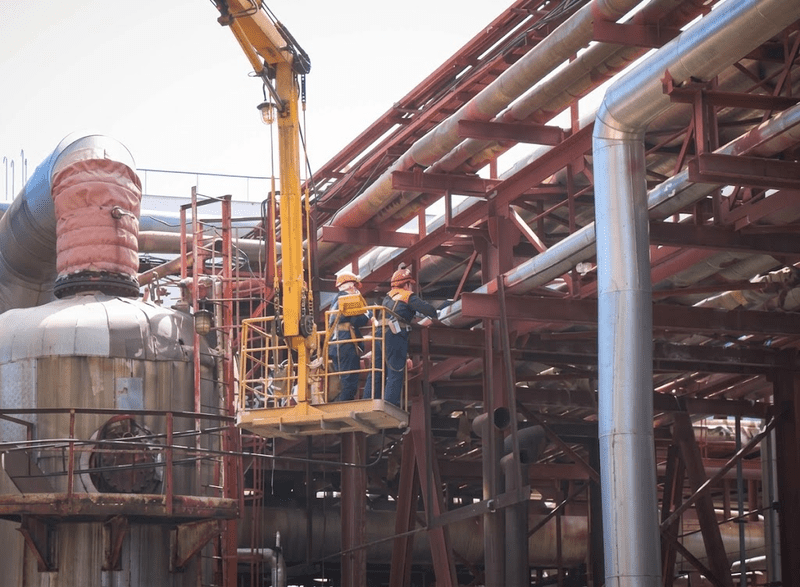
These welding jobs require independent problem-solving skills. Since field welders often work without a supervisor standing over their shoulder, employers value individuals who demonstrate strong work ethic, attention to safety, and solid foundational techniques.
Forging Your Future: Spark Your Career at Arclabs
High-level field maintenance work requires advanced certifications and specialized structural training, but every expert welder starts with the basics. You cannot perform complex out-of-position field repairs without first mastering core puddle control, joint setup, and safety procedures.
Arclabs Welding School focuses on delivering rigorous, hands-on instruction to build those mandatory baseline skills. Through immersive shop practice across fundamental processes, students develop the muscle memory, blueprint reading ability, and technique required to enter the trade with confidence.
If you thrive on hands-on problem-solving and want to prepare for dynamic welding jobs in heavy construction and maintenance, solid training is your starting point.
Call 877-647-4111 or reach out to an admissions advisor to learn more about our foundational welding programs, explore our campus facilities, and discover how hands-on training can launch your career in the skilled trades.

